


Most feasibility work is redone three times
A surveyor measures, an engineer models, a salesperson prices — each in their own file. By the time the lender asks a question, nobody can say which version is true.
3.4 site visits per closed deal
Because the first visit captured the wrong things and nobody noticed until design started.
11 days median report turnaround
Long enough for a competitor to quote, and for the customer’s enthusiasm to cool.
1 in 5 designs rebuilt after survey
Shading and obstruction data that never made it from the roof into the model.
Survey photos that answer nothing
Forty pictures of the roof and not one of the distribution board the engineer needed.
A price that will not survive procurement
Quoted from a rate sheet updated when someone remembered, not from what is actually in stock.
A report the lender cannot audit
Yield, assumptions and photos in three files, none of which says which version is current.
One flow, four checkpoints
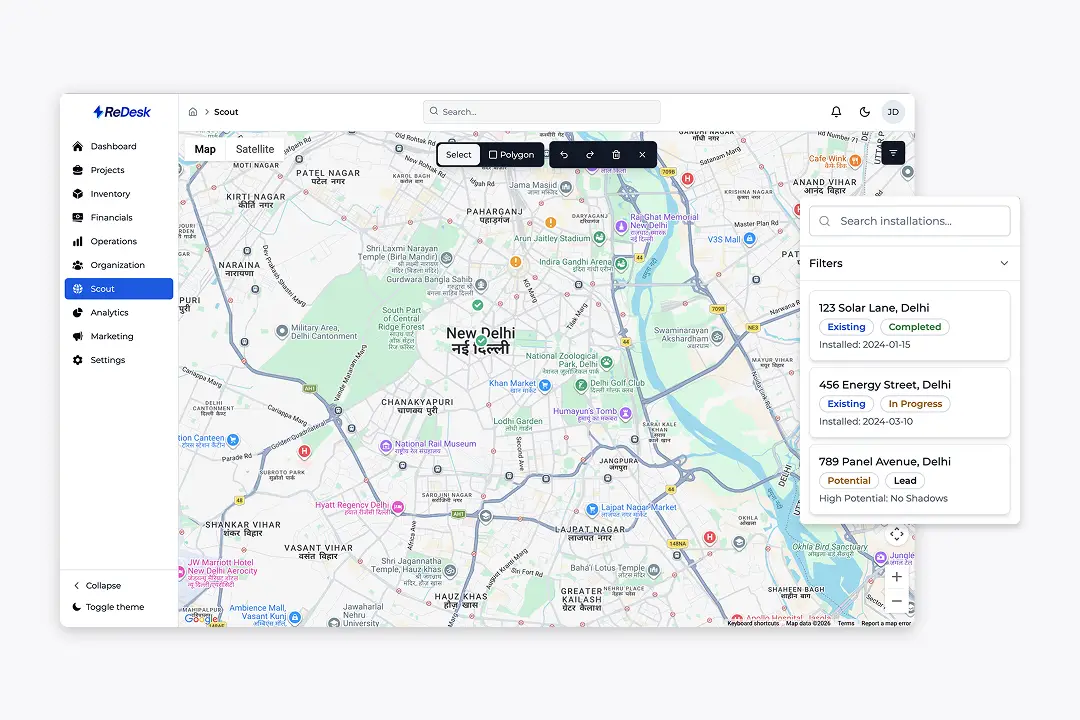
Draw the territory, rank the roofs
Polygon search returns every existing, in-progress and potential site inside the area, each with the qualifier that scored it — orientation, usable area, load profile.
Powered byReDesk AI Scout ›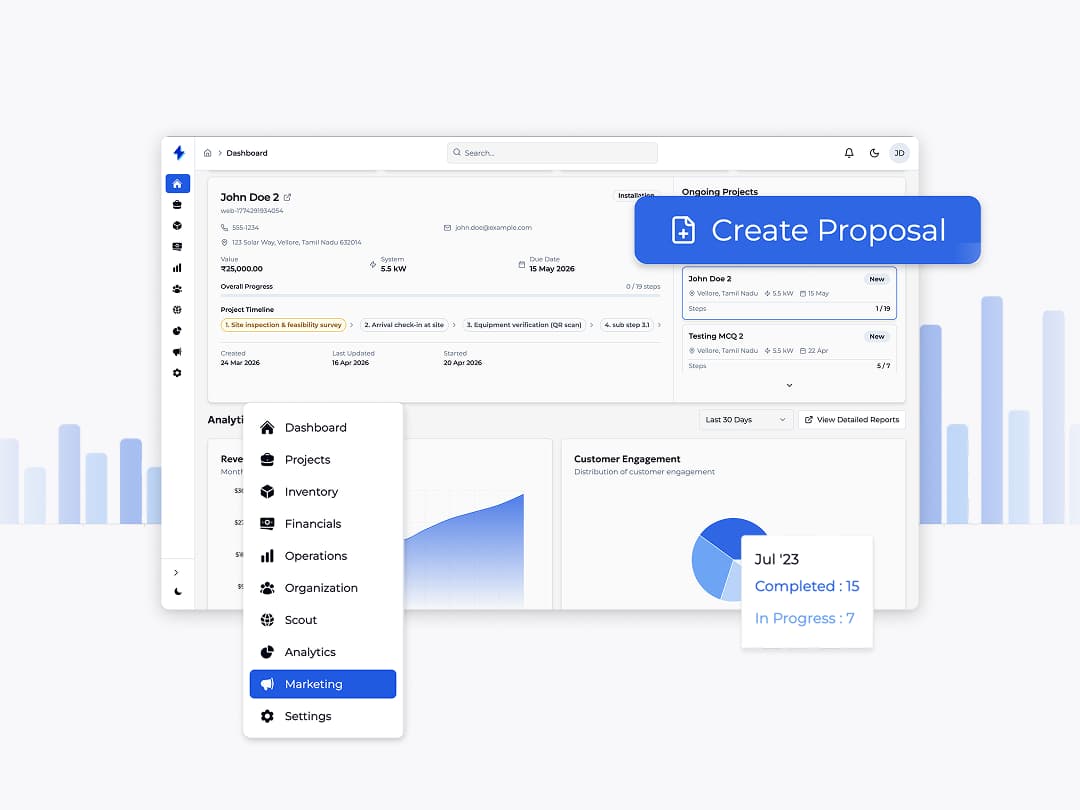
Yield the lender will accept
Hourly irradiance against the real roof geometry, shading from the survey photos, and a degradation curve per module in the catalogue.
Powered byReStudio ›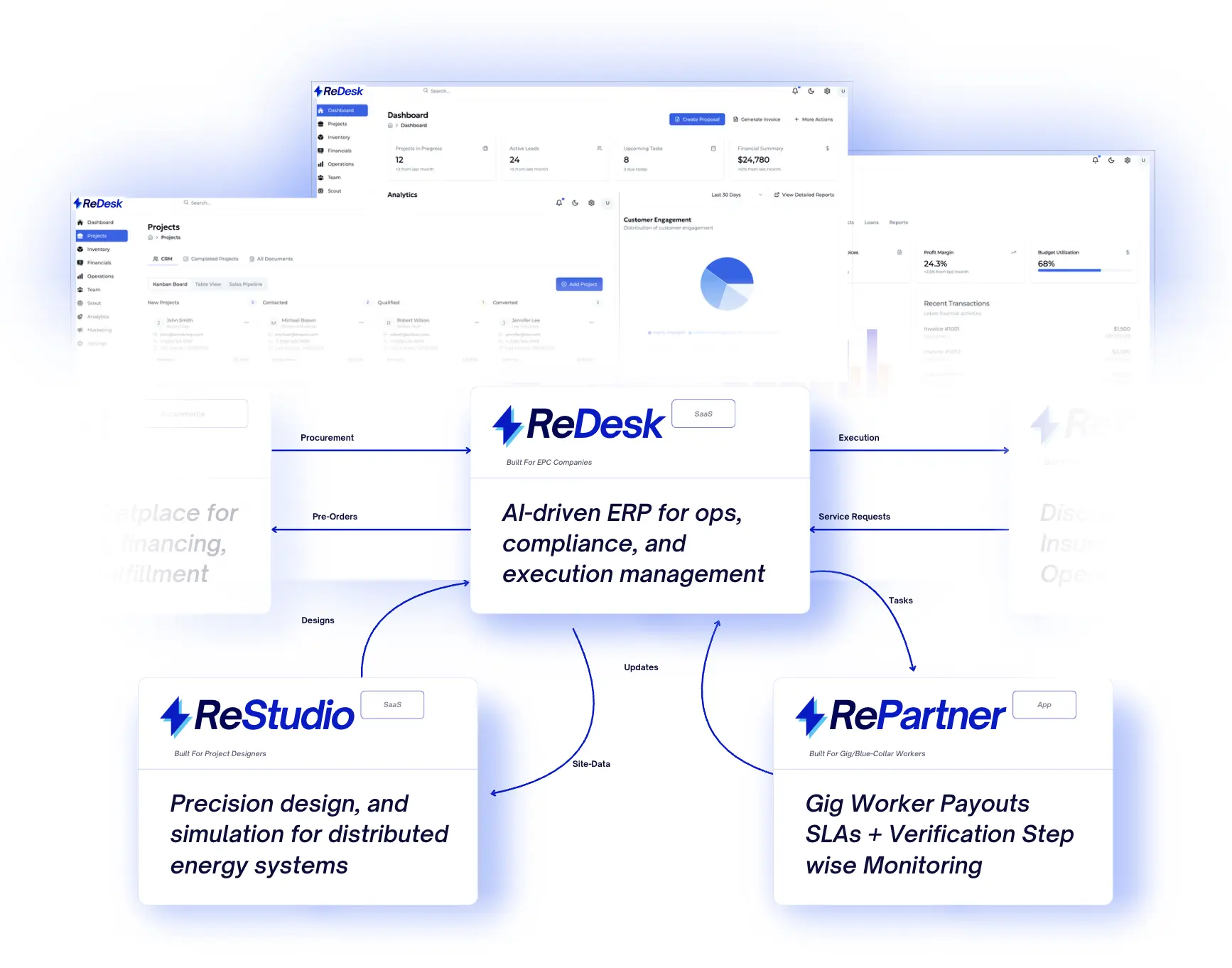
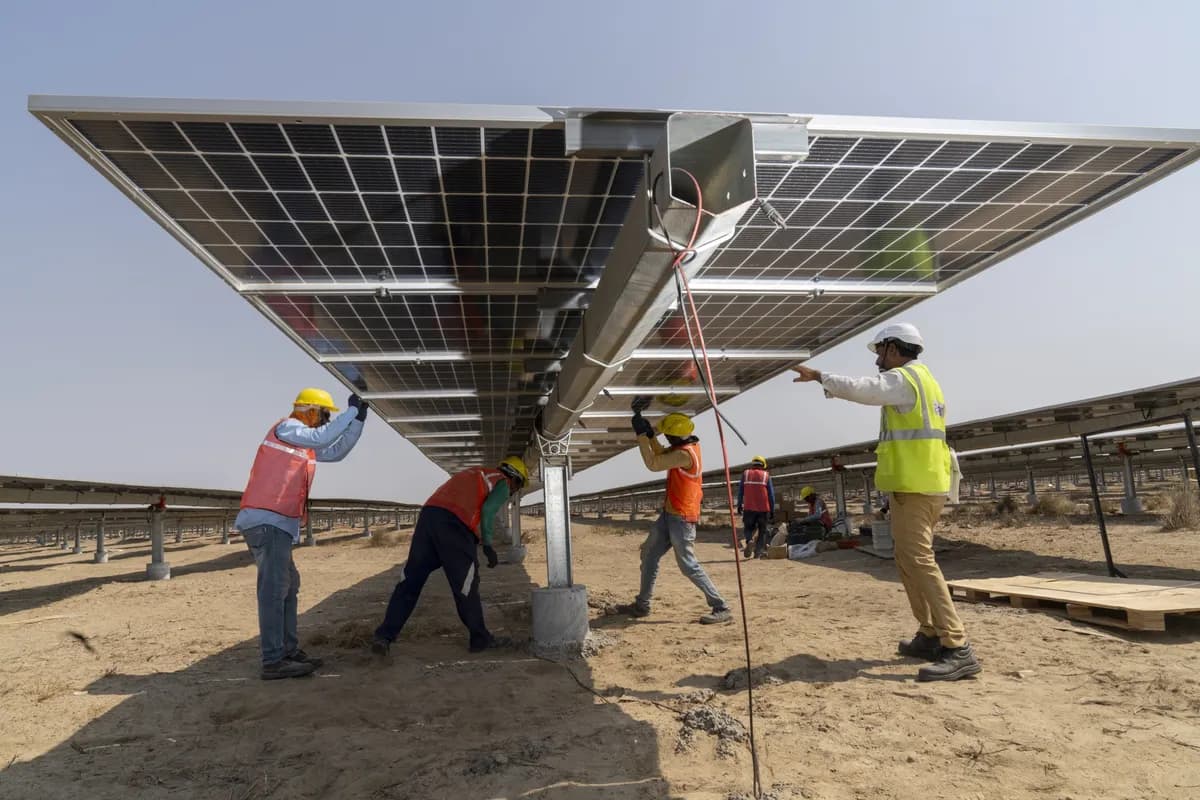
Bill of materials at today’s price
Every component resolves to a verified catalogue entry with live pricing, lead time and warranty terms — so the feasibility number survives procurement.
Powered byReCart Buyer ›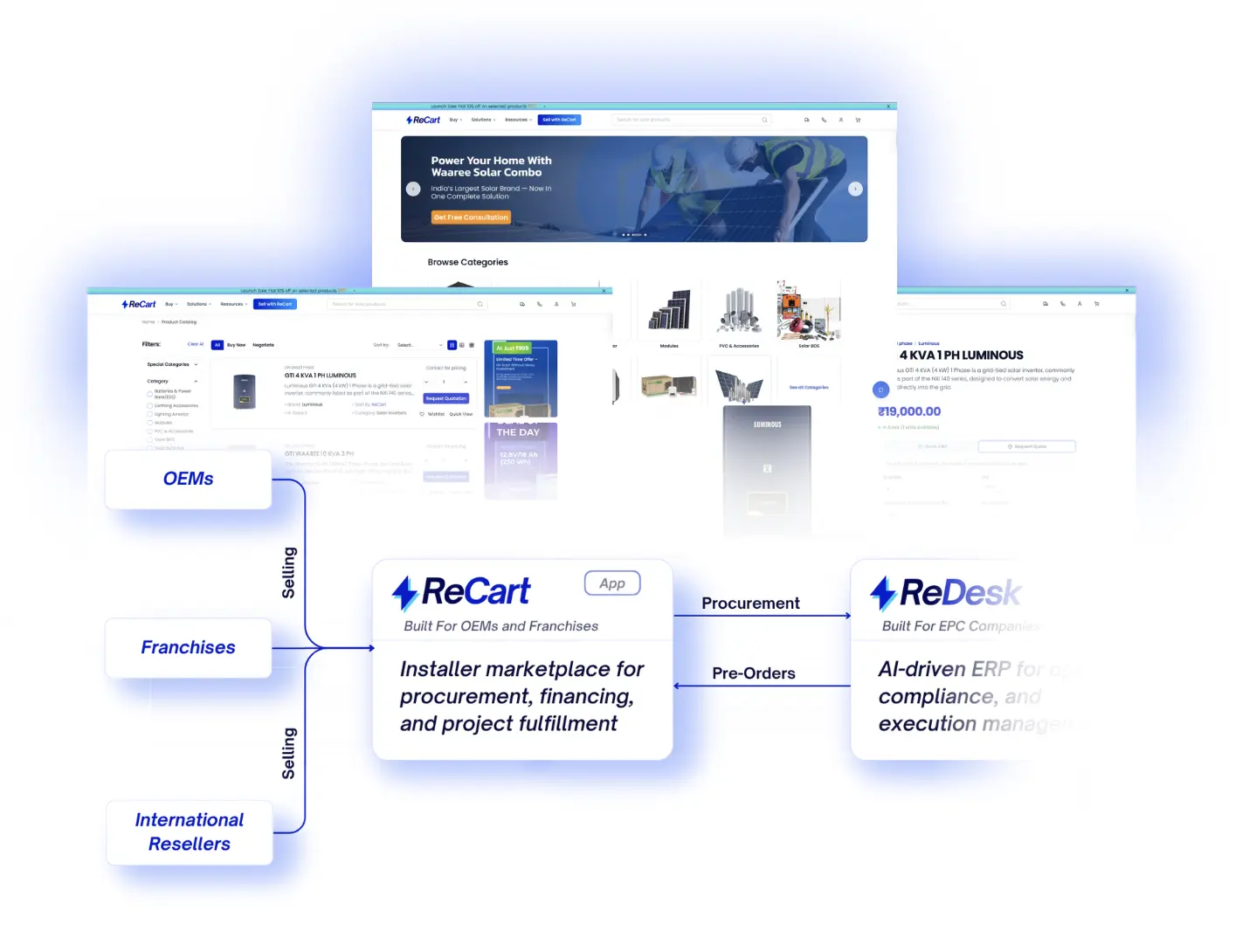
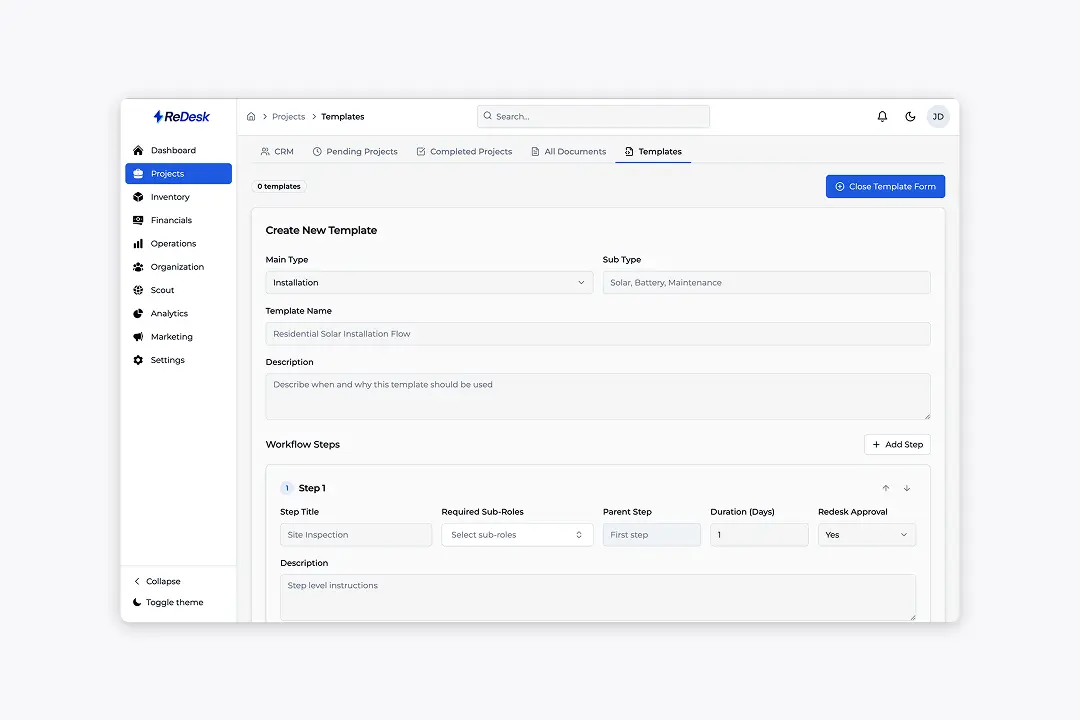
A report with its evidence attached
The customer gets a branded document; the lender gets the underlying assumptions, photos and serial-level catalogue references behind every figure.
Powered byRePrime ›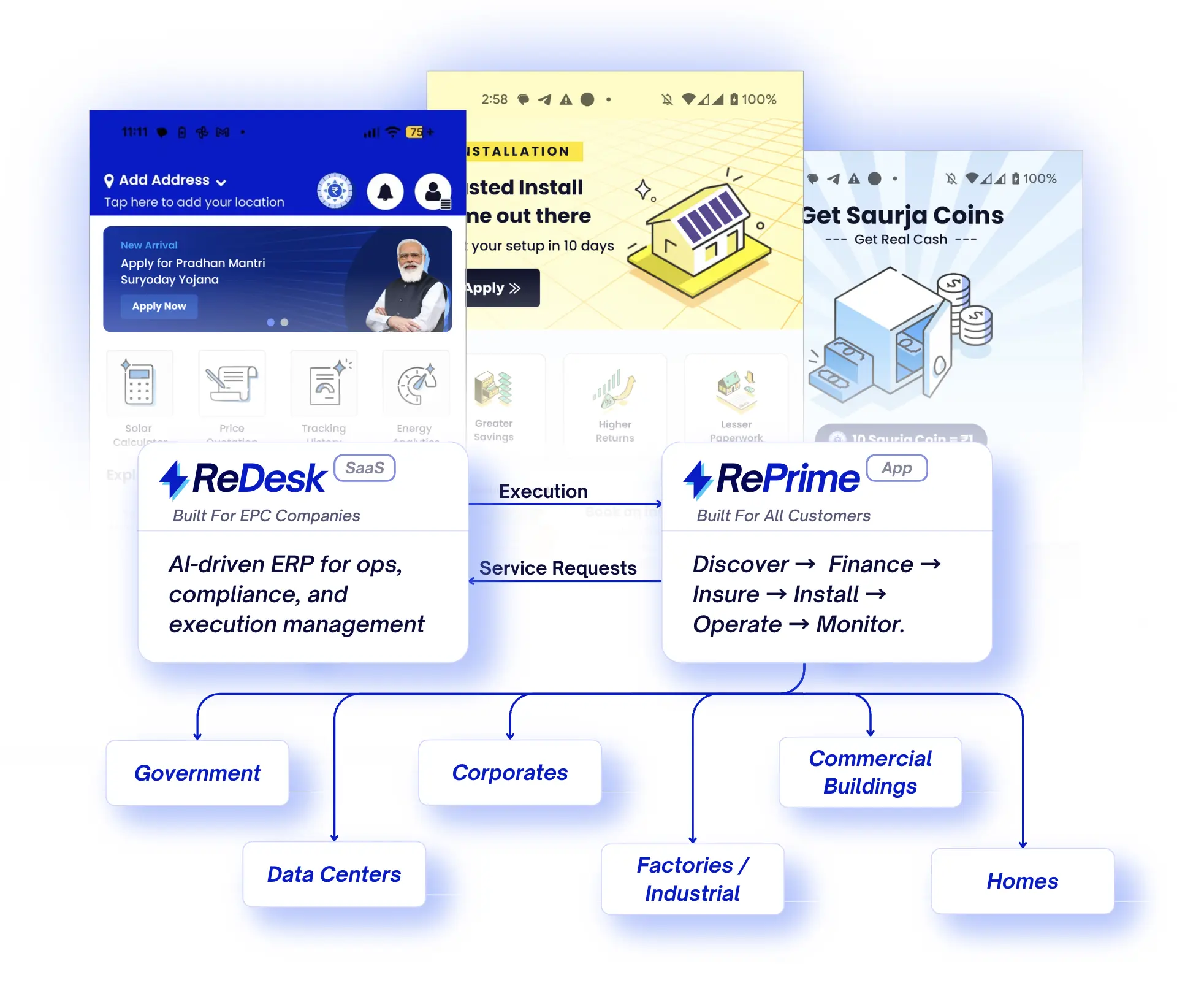
Four products, one project record
You do not buy a feasibility module. The same products that run your deployments produce the study — which is why the numbers still hold six months later.


